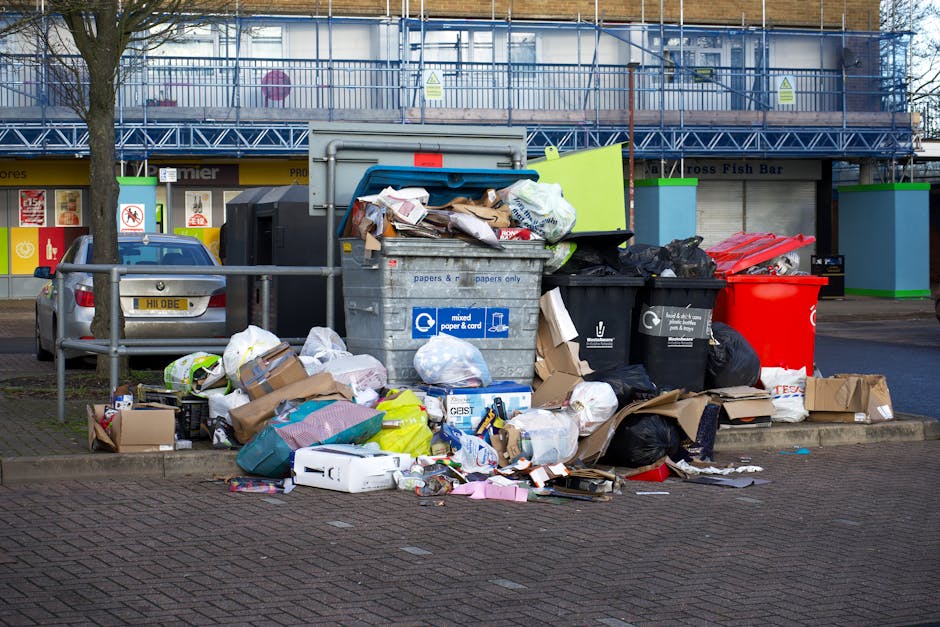
Rubbish removal for Barnet Market stall holders
If you run a stall at Barnet Market, you already know the real mess of market days is not always the trading itself. It is the cardboard, food packaging, broken crates, peelings, shrink wrap, tape, and the awkward bits that seem to multiply by lunchtime. Rubbish removal for Barnet Market stall holders is about keeping that flow under control so your pitch stays tidy, safe, and easy to reset for the next trading session. Done properly, it saves time, reduces stress, and helps you avoid the kind of build-up that becomes a problem before you have even noticed it.
In this guide, we will look at how market waste collection and stall clearance usually work, what stall holders need to think about, where the common traps are, and how to make the whole process feel less like a chore. It is practical, local, and written for the realities of a busy market morning when the clock is ticking and you have three other jobs to do at once.
Contents
- Why rubbish removal matters at Barnet Market
- How rubbish removal works in practice
- Key benefits and practical advantages
- Who this is for and when it makes sense
- Step-by-step guidance
- Expert tips for better results
- Common mistakes to avoid
- Tools, resources and recommendations
- Law, compliance, standards, and best practice
- Options, methods, and comparison table
- Case study or real-world example
- Practical checklist
- Conclusion
- Frequently asked questions
Why Rubbish removal for Barnet Market stall holders Matters
A market stall is only as professional as the space around it. If customers see overflowing bags, loose packaging, and waste left at the back of the pitch, it changes the feel immediately. It makes the stall look rushed, even if your products are excellent. Worse, it can create trip hazards, attract pests, and slow down your breakdown at the end of the day.
For Barnet Market stall holders, waste management is not just about looking neat. It is about protecting trade, protecting customers, and protecting your own working rhythm. Markets are busy, compressed environments. You often have narrow access, tight setup windows, and little room for waste to linger. A few extra sacks, one broken pallet, or a pile of wet cardboard can turn a manageable end-of-day job into a frustrating one.
There is also a commercial angle. Cleaner stalls tend to reset faster. Faster reset means less time wrestling with debris after closing. And less time on rubbish means more time on what actually makes money. That part is simple, really. Nobody goes to market because they enjoy staring at flattened boxes.
Expert summary: The best market waste system is the one you barely have to think about. If it is easy to sort, easy to move, and easy to collect, it will stay under control.
For traders who need broader support with recurring commercial waste, business waste removal can be a useful fit alongside market-day clearance. And if your stockroom, prep area, or nearby storage unit also needs clearing from time to time, waste removal services can help keep the whole operation calmer.
How Rubbish removal for Barnet Market stall holders Works
At its simplest, the process is straightforward. You separate waste during the trading day, bag or box it safely, and arrange collection or disposal at a time that suits market operations. In practice, there are a few moving parts, because market waste is rarely one single material. You may have light recyclables, organic waste, damaged display items, old packaging, and the occasional awkward item that does not fit neatly into a bin.
Most stall holders work best with a routine that starts before opening. Set aside a place for waste as you build the stall. Keep bags, a crate, or a lidded container out of customer sight if possible. Throughout the day, flatten cardboard as you go. Do not wait until the end. That is where the pile-up starts. By closing time, the waste should already be partly organised, not a chaotic heap that smells faintly of onions and rainwater.
Collection or removal then depends on the type and volume of rubbish. Small daily waste may be collected through your normal market arrangement. Larger loads, or items that cannot stay on-site, may need a dedicated uplift. If a stall has generated old shelving, damaged signage, broken furniture, or unsellable stock, a more comprehensive clearance may be needed. For that kind of mixed load, a provider experienced in commercial clearances is usually the better option.
When you are planning the wider picture, it helps to think beyond the stall itself. Many traders also use pricing and quotes information to compare collection options, while some prefer to book online when they know the collection window they need. Straightforward is good. Less phone tag, less faff.
Key Benefits and Practical Advantages
The obvious benefit is a cleaner stall. That matters more than people sometimes admit. Shoppers notice tidiness, especially in food-heavy or gift-heavy markets where presentation carries a lot of weight. But there are deeper advantages too.
- Faster breakdowns: less time sorting waste after closing.
- Safer trading space: fewer loose boxes, cut plastic, and slippery spill risks.
- Better customer impression: a tidy pitch looks organised and reliable.
- Less storage pressure: waste leaves sooner instead of sitting in the van or back room.
- Improved recycling habits: cardboard, plastics, and metal can be separated more easily.
- Reduced nuisance: no awkward waste build-up around neighbouring stalls.
There is also a quieter advantage: peace of mind. If you know your waste is handled well, you are less likely to spend the day wondering where to put the next box or whether the back of your stall is becoming a mini landfill. Truth be told, that mental relief can matter just as much as the physical tidy-up.
For stall holders who sometimes handle old display units, damaged tables, or other bulky items, furniture disposal and furniture clearance can be practical references for the kind of removal support that goes beyond ordinary bin bags.
Who This Is For and When It Makes Sense
This kind of rubbish removal is useful for a wide range of Barnet Market traders. Food vendors, florists, clothing stalls, antique sellers, craft traders, seasonal pop-ups, and general merchandise stalls all create different waste streams. The materials change, but the need is the same: a clean, predictable way to get rid of rubbish without slowing down trade.
It makes particular sense when:
- you bring a lot of cardboard or wrapping material each day;
- you sell items that require protective packaging;
- you deal with food waste, peelings, or damaged perishables;
- you often have bulky broken stock or display equipment;
- you share a market area with other traders and need to avoid spillover clutter;
- you are preparing for seasonal peaks, like Christmas or summer events;
- you are closing a stall temporarily and need a clear-out.
If you are only generating one small bag of rubbish, simple internal disposal may be enough. But if the waste is mixed, heavy, or annoying to shift, getting help is often the smarter move. A market day can be long already. No need to make the last ten minutes feel like a punishment.
Sometimes the need is temporary too. A trader may be redesigning a stall, changing stock, or clearing old storage after a poor season. In those cases, a clearance service may be more useful than a basic collection. If the item mix includes old shelves, damaged fridges, or tired fixtures, pages like fridge and appliance removal and office clearance can be relevant depending on what you are throwing out.
Step-by-Step Guidance
If you want the process to feel easy rather than reactive, build it in stages.
- Identify your waste streams. Separate cardboard, food waste, plastics, mixed rubbish, and bulky items before the day starts.
- Choose a holding point. Decide where waste will sit during trading without blocking customers or staff.
- Flatten and bundle early. Cardboard takes up far less room when collapsed as you go.
- Keep liquids and food residue contained. A leaky bag is the fastest route to a bad-smelling corner and a messy trolley.
- Remove hazards as soon as they appear. Broken crates, sharp metal edges, and damaged display pieces should not wait until closing.
- Schedule collection for the right time. Align uplift with market hours, access rules, and your own breakdown routine.
- Check the load before handover. Make sure nothing prohibited, hazardous, or confidential has slipped into the pile.
- Review what happened after the session. If one waste type keeps causing issues, adjust the setup next time.
A small improvement can make a big difference here. For example, one extra bin liner near the till can prevent a lot of tiny wrappers from drifting into your workspace. Sounds trivial. It is not.
If your stall also creates paperwork, labels, or printed records that need secure handling, confidential shredding is worth noting for documents that should not go into general waste.
Expert Tips for Better Results
Over time, the stalls that stay tidy usually have one thing in common: they make waste management part of setup, not an afterthought. That is the trick. A few small habits save a lot of mess later.
- Use colour-coded bags or containers so staff know what goes where without asking every five minutes.
- Keep a fold-flat box for loose cardboard so it does not topple around the pitch.
- Protect the floor area with a mat or liner if you sell messy produce or open food.
- Assign one person to waste control during busy periods so it does not become everyone's job and nobody's job at the same time.
- Plan for weather. Wet cardboard, windblown packaging, and muddy wrap need a bit more attention than you think at 8 a.m.
- Review your stall layout if rubbish keeps building up in the same awkward spot.
Another practical point: do not let bulky waste sit because "it will do until later." Later has a habit of arriving when you are tired, cold, and wondering why the van door is sticking. If something is clearly no longer useful, get it out of the way quickly. It frees space and clears your head a bit too.
For traders who are trying to build a more sustainable routine, the page on recycling and sustainability is a sensible place to think about reducing what goes to disposal in the first place. Reuse, reuse, reuse. Then recycle where you can.
Common Mistakes to Avoid
Most waste problems at markets are not dramatic. They are just small mistakes that keep repeating. The good news? Easy enough to fix once you spot them.
- Mixing everything together. Recyclables become harder to recover, and the load is less efficient.
- Leaving waste until the end. End-of-day piles are heavier, messier, and slower to handle.
- Ignoring food residue. Smelly waste attracts insects and creates hygiene issues fast.
- Using weak bags. One split bag can ruin the whole tidy-up.
- Blocking access routes. Waste should never make it harder for customers or staff to move safely.
- Putting restricted items in general rubbish. Some items need special handling, not a shrug and a bin bag.
- Forgetting what happens off-site. Good waste management does not stop at the market gate.
And yes, sometimes the mistake is just optimism. "It should be fine" is not a waste strategy. Not really.
If you are unsure whether an item is suitable for a skip-style load or a mixed waste collection, the guidance on what can go in a skip is useful as a general reference point. It will not answer every market-specific scenario, but it helps with the common do-or-don't decisions.
Tools, Resources and Recommendations
You do not need a complicated setup to manage stall waste well. In fact, simple often wins.
Useful tools and supplies:
- heavy-duty refuse sacks;
- collapsible crates for cardboard and packaging;
- gloves for handling mixed waste;
- tape, scissors, and a cutter for breaking down boxes;
- a lidded bin or tub for food waste;
- labels for sorting waste streams;
- small trolley or sack truck for moving heavier bags.
Useful service considerations:
- same-day or timed collection if your trading window is short;
- clear pricing so you know what the removal will cost before committing;
- an insured provider with clear safety practices;
- recycling-led handling where possible;
- support for bulky items if your stall layout changes.
It can also help to check a provider's practical policies before booking. Pages such as insurance and safety, health and safety policy, and payment and security are useful signals that the operator takes the work seriously. That matters, especially in busy public spaces where awkward lifts and tight corners are part of the job.
Law, Compliance, Standards, and Best Practice
Market traders in the UK should treat waste with care and common sense. In practical terms, that means separating waste correctly, using appropriate containers, and making sure anything removed is handled by a suitable service. If waste includes items that may be classed as hazardous, contaminated, or otherwise controlled, it needs the right disposal route. Do not guess. If in doubt, ask before the load leaves site.
Best practice for stall holders usually includes:
- keeping the trading area free from waste that could cause slips or trips;
- not overfilling bags to the point they split on handling;
- separating recyclable material where feasible;
- storing waste securely so it does not blow away or leak;
- using a provider that understands commercial waste handling;
- keeping an eye on hygiene where food is sold or prepared.
If your stall generates items that require special treatment, such as electrical equipment or potentially hazardous waste, they should not be mixed into general rubbish. A cautious approach is better than trying to save a little time and creating a bigger problem later. That is a very normal market lesson, unfortunately.
For traders with regular commercial operations beyond the market pitch, the broader pages on business waste removal and hazardous waste disposal may be helpful to explore in context.
Options, Methods, and Comparison Table
There is more than one way to handle stall waste, and the right choice depends on how much rubbish you create, how often you trade, and what kind of items you need to remove. Here is a simple comparison.
| Method | Best for | Pros | Limitations |
|---|---|---|---|
| On-stall bagging and end-of-day bin disposal | Low volumes of ordinary waste | Cheap, simple, quick | Not ideal for bulky or mixed items |
| Scheduled market waste collection | Regular traders with predictable waste | Routine, tidy, low effort | May not suit unusual loads or one-off clear-outs |
| Dedicated rubbish removal service | Bulky, mixed, or awkward loads | Flexible, practical, less manual handling | Usually more involved than standard disposal |
| Full stall clearance | End-of-season resets, closures, refurbishments | Handles fixtures, stock remnants, and waste together | Needs more planning and timing |
To be fair, many stall holders end up using a mix. Daily bagging for the little stuff, then a proper clearance when stock changes or equipment gets tired. That is often the sweet spot.
If your stall includes old display furniture, you might also find furniture clearance and mattress and sofa disposal helpful for understanding how larger household-style items are typically dealt with when they are no longer useful.
Case Study or Real-World Example
Imagine a small food-and-goods stall trading through a damp Saturday. By midday, there is cardboard from deliveries, cling film from produce, paper bags, a few split boxes, and some damp packaging that has absorbed a bit of rain. Nothing dramatic, just enough to start crowding the back of the pitch.
The stall holder flattens boxes as they are emptied, keeps food waste in a lidded bin, and separates dry recyclables from the rest. At close, the waste is already grouped into neat bags and one stack of flat cardboard. Instead of wrestling with a pile, the team loads the bags quickly, clears the pitch in minutes, and leaves with less stress and no last-minute scramble.
Now compare that with the alternative. Waste gets shoved behind a table, bags start to tear, damp packaging leaks, and the final ten minutes turn into a little chaos. Not a disaster, but enough to make everyone grumpy. You can almost hear the sighs. The difference is mostly organisation, not effort.
That is why a sensible removal process matters. It keeps the trading day feeling manageable, even when the weather is rubbish and everyone is moving a bit faster than they should.
Practical Checklist
Use this simple checklist before, during, and after market trading.
- Have enough heavy-duty sacks and liners on site.
- Set aside a waste area that does not block customers.
- Flatten cardboard as deliveries are opened.
- Separate recyclable items from mixed rubbish.
- Keep food waste sealed and contained.
- Remove sharp or broken items straight away.
- Do not overfill bags.
- Check for any item that needs specialist disposal.
- Make sure collection timing matches your close-down routine.
- Review what waste was generated so you can improve next time.
If you are dealing with a seasonal reset, stock change, or a wider clear-out, it may also be worth looking at garage clearance, home clearance, or house clearance style approaches, since the principles of sorting, lifting, and safe removal are similar even if the setting is different.
Conclusion
Rubbish removal for Barnet Market stall holders works best when it is built into the way you trade, not treated as an extra job at the end of a long day. A tidy pitch is safer, faster to close, and far easier to manage. It also helps your stall look the part, which matters more than people sometimes admit.
The big takeaway is simple: separate early, contain waste properly, and choose the right removal method for the job. Small routines prevent bigger headaches. And in a market environment, that is worth a lot.
If your waste is becoming awkward, bulky, or just too much to handle without slowing the day down, getting proper help can make the whole operation feel lighter. Honestly, sometimes that is the difference between a drained finish and a decent one.
Get a free quote today and see how much you can save.
Frequently Asked Questions
What counts as rubbish for a Barnet Market stall?
Typical stall waste includes cardboard, packaging, food scraps, broken display materials, damaged stock, and general mixed rubbish. If an item is bulky, sharp, contaminated, or unusual, it may need separate handling rather than being thrown in with everything else.
Do stall holders need a special rubbish removal service?
Not always. Smaller stalls may manage with simple bagging and standard disposal. But if you produce a lot of cardboard, food waste, or bulky items, a dedicated removal service is often much easier and safer.
How often should market waste be removed?
That depends on trading volume. Some stalls only need end-of-day disposal, while others benefit from more frequent collections. If waste starts affecting safety, space, or hygiene before the day ends, it is already overdue for a better routine.
Can I mix cardboard and general waste together?
You can physically mix them, but it is usually a bad idea from a recycling and efficiency point of view. Flatten cardboard separately where possible so it takes up less room and is easier to handle.
What if my stall has bulky broken items?
Bulky items are where a dedicated clearance really helps. Broken tables, shelves, display units, or other awkward pieces are harder to manage in ordinary waste bags, and they often need a more practical collection method.
Is food waste handled differently from packaging waste?
Usually, yes. Food waste should be contained carefully to avoid smells, leaks, and hygiene issues. Packaging can often be separated for recycling if it is clean and dry enough. The trick is keeping the two streams apart from the start.
What should I do with damaged electrical items?
Do not mix them into general rubbish without checking the disposal route. Electrical items often need separate handling, especially if they are large, contain refrigerant, or have wires, batteries, or other components that should not go into ordinary waste.
How do I keep waste from making the stall look messy?
Use hidden or lidded bins where possible, flatten cardboard early, and remove waste throughout the day instead of leaving it all for closing time. A little discipline there goes a long way, and customers do notice.
Can rubbish removal help with seasonal stall resets?
Yes. Seasonal changes are one of the best times to arrange proper clearance. If you are swapping stock, replacing display equipment, or closing temporarily, a targeted removal keeps the reset much quicker and less stressful.
How do I know if an item needs specialist disposal?
If it is hazardous, contaminated, electrical, refrigerating, or simply awkward in a way that normal bags cannot manage, it is worth treating it as specialist. When in doubt, ask before putting it into the general waste stream.
Why does waste management matter so much at a market?
Because everything is compressed. Less space, more footfall, tighter timings, and more opportunities for clutter to get in the way. A good waste routine protects safety, keeps the stall presentable, and helps you pack down without the usual end-of-day chaos.
A well-run stall feels calmer, even on a busy day, and that calm tends to show in the work too.